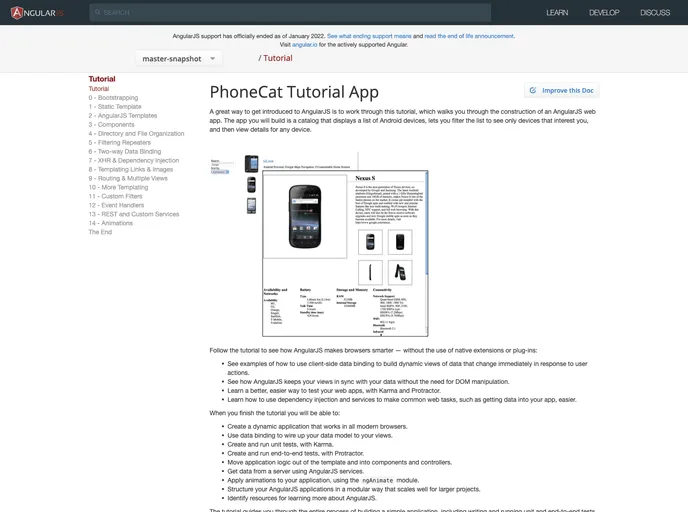
Tutorial on building an angular application.
The AngularJS Phone Catalog Tutorial Application stands as a comprehensive guide for developers looking to master AngularJS through practical application. Mimicking the now-defunct Google Phone Gallery, this tutorial walks users through creating a fully functional web application, emphasizing key concepts of AngularJS with each lesson structured around tagged commits. This hands-on experience not only teaches the framework but also provides insight into best practices for web development.
With no dynamic backend, the application cleverly simulates server interactions by utilizing static JSON files, offering a straightforward approach to understanding AngularJS functionality. Each stage of the tutorial builds upon the last, ensuring that users steadily enhance their skills while creating a real-world application throughout the process.
Step-by-Step Learning: The tutorial is divided into clearly defined steps, allowing developers to learn progressively, addressing one crucial aspect of AngularJS at a time.
Dynamic Templates: Users are guided to convert static templates into dynamic ones using Angular features such as controllers and directives, enhancing data interactivity.
Reusable Components: The introduction of components teaches users the importance of reusability and isolation in application design, contributing to cleaner code and maintainability.
File Organization: Best practices for structuring files and directories are presented, encouraging developers to keep their code organized by feature area, which aids in scalability.
Testing Integration: The tutorial emphasizes the importance of unit and end-to-end tests, with practical examples showing how to implement them using tools like Karma, ensuring application reliability.
Filtering and Search: By adding features such as filtering and search functionalities, the application also teaches data binding principles, enhancing user experience.
Dependency Injection: The use of dependency injection simplifies the management of services and components, making the application structure more efficient and easier to manage.

