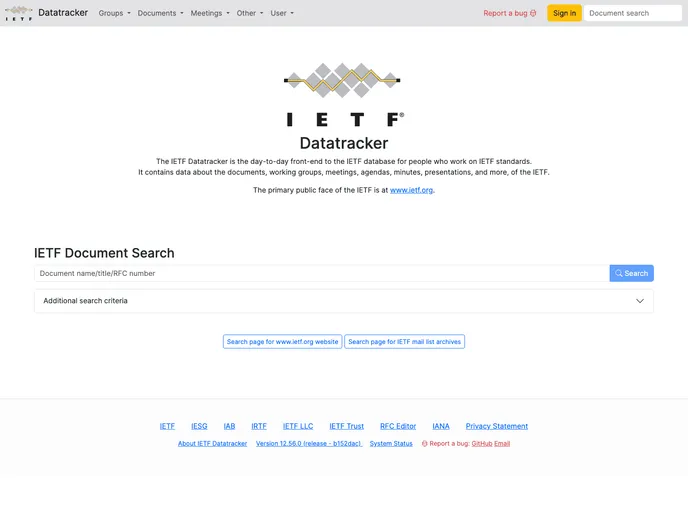
The day-to-day front-end to the IETF database for people who work on IETF standards.
Overview
The IETF Datatracker serves as a crucial tool for individuals involved in the development of IETF standards, streamlining the management and tracking of relevant data. This platform allows for efficient front-end interaction with a comprehensive database tailored to support the intricacies of standardization processes. Not only does it enhance productivity, but it also aims to foster collaboration and transparency within the IETF community.
Moreover, the development environment is built with modern tools, enabling a smooth and effective workflow for contributors. With clear guidelines and an easy-to-follow setup process, the Datatracker encourages participation from both new and seasoned developers looking to engage with IETF standards.
Features
- Docker Development Environment: Simplifies the setup process for developers, allowing quick deployment and testing with containers.
- Git Feature Workflow: Incorporates a standard development model, ensuring an organized and efficient approach to code contributions and management.
- Cloning Efficiency: Provides tips for limiting history depth when cloning projects, saving time and disk space during the initial setup.
- Support for Modern Tools: Integrates popular development tools like VS Code, facilitating ease of use and enhanced functionality with container management.
- Collaboration and Issue Tracking: Encourages community engagement through discussions for bug reports, enhancements, and feature requests, streamlining issue management.
- Comprehensive Documentation: Offers extensive guidance on everything from creating forks to deploying changes, ensuring developers have the necessary resources at their disposal.
- Continuous Testing: Promotes a testing workflow that verifies the development progress, ensuring all contributions are stable and functional before integration.